Thursday, November 23, 2017

a cup of ( )


Can you pick up one word among 23 nouns in terms of grammar?

advice / air / bookstore / bread / cheese / coffee / food / fruit / furniture / happiness / information / jam / marmalade / money / news / oil / paper / peace / sugar / tea / water / wood / yogurt

“bookstore” is the only word you can count among this list.

You can count countable nouns. You cannot count uncountable nouns.
To explain this, the textbook has example sentences:
There is a bookstore around the corner.
There are two bookstores there.
Which do you like better, jam or marmalade?

If you need to count “coffee”, you can say “a cup of coffee”.
“many” is used with countable nouns and “much” is used with uncountable nouns.
“a lot of” can be used with both types of nouns.

Look at the picture I took at a cafe. Towns also have English examples:
a cup of happiness
a lot of happiness
                                                                                             (166 words)

Wednesday, November 22, 2017

Living Words

Do you like chocolate? If you like it, you must have seen the word “bitter” on its package. Look at the picture I took. 

One of my students asked me a question. “How do you say 苦い in English?” Answering this question, I cannot help think that she must have seen the answer in her everyday life.

My students, look around you! Studying your textbook is your job as a high school student, but your life is not only in the classroom. You are living your own life. Why don’t you look for English words in your town. Words also are living.
                                                                                                  (103 words)

Tuesday, November 21, 2017

Welcome back to Japan!

2nd graders of my high school went to Vietnam as school trip last week.
My students, welcome back to Japan!
Did you eat フォー?
Do you know how to write it in English?
You can see it at convenience stores. Look at the picture I took.

I have never tasted the real "Pho" in Vietnam.
My students, let me know what you saw, what you felt, what you thought, and what you learned.

Saturday, November 18, 2017

Ensemble

My high school has global and local learning for students.
For example, my students can take 3 days lessons of Chinese, Korean, Spanish, German, or French languages.

I am in charge of managing these classes of many languages. I watched a French lesson and one sentence introduced through YouTube caught my eyes.


I am also in the wind ensemble club. And today, my students went out to play music at a festival in our local community.

The word “ensemble” can be a key word of both global and local learning.  

Thursday, October 12, 2017

I Hate English!

Student:
I forgot my textbook.

Teacher:
Tell me the reason why.

Student:
It was eaten by my dog.

Teacher:
What?

Student:
Pochi ate my textbook.

Teacher:
What?

Student:
My dog can read my mind.

Teacher:
What?

Student:
I hate English!


Wednesday, February 8, 2017

Society and the World

What do you think of the difference?

Society is always around you, but the world can be around and within you.

Saturday, January 21, 2017

On Inauguration Day

six words description:

He is raising his right hand,
wearing a red tie as usual,
putting his left hand on Book.

Monday, January 9, 2017

A Tanka

一粒の向日葵の種まきしのみに荒野をわれの処女地と呼びき (寺山修司)
(hitotsubuno himawarinotane makishinomini kouyaowareno shojochitoyobiki)

Only planting a seed of sunflower has made me call the open space my virgin land.

Blessed are those who have a seed of sunflower in your hand.
On Coming-of-Age Day in Japan.

Sunday, January 8, 2017

A Haiku

葱買て枯木の中を帰りけり (与謝蕪村)
(Negikoute karekinonakao kaerikeri)

Bought green onions and went home through naked trees.

It ushers us into a Japanese hearth.

Wednesday, November 23, 2016

Monday, October 31, 2016

My favorite Dylan's song

Dylan's Nobel makes me think of what literature is. The singer's achievement gives me a sense of freedom that literature is not only within books. Any words could be something wonderful, just as "the answer is blowin' in the wind."

Here is my favorite Dylan's song:
    

Thursday, September 22, 2016

"The Darkness"

One day, catching the sound of a Dylan’s song through the speaker, a Canadian teacher mentioned a singer from the country. I have heard his name before but I have not much listened to his music.

Leonard Cohen is a Canadian singer and poet. He wrote as follows:
“I caught the darkness. It was drinking from your cup.”

Please listen to his deep voice.
What is the darkness? Is it something between you and me?

Wednesday, August 31, 2016

Captions (Part 2)

You can see a sacred tree called “bodaiju”. I went to Sri Lanka this summer. These pictures were taken at ශ්‍රී දළදා මාළිගාව; Sri Dalada Maligawa (Temple of the Tooth). Local people gather around this tree and sit spending their time. The tree must have seen the elephant, the rooster, the chickens, the running boy, the little sister, the dog, people over the fence, the cleaning boy, and me taking photographs.

Captions (Part 1)


I saw an elephant in a town. People are watching him or her. A big animal attracts people. It looks like a zoo, but it is a temple.
I found a brown rooster behind motorbikes. It looks like a male because of the shape of its head. I wonder why he stays in such a narrow space.
I entered the temple and saw two white chickens running around. They are very active even in the glaring sunshine. It is a very hot summer day.
I heard cheerful voices. A boy and a girl who seem to be a family are laughing. They are chasing the two white chickens. At another moment, I saw the two chickens chasing that brown rooster out of the place.
A dog is sleeping in the shade of a tree. The tree gives comfort, but if I were this dog, I would not sleep in such an open space. Dogs seem to be able to sleep anywhere.
Inside the temple, I am closer to the elephant than people talking over the fence.
A boy is cleaning in front of the stairs. Could you see sandals or shoes beside the stairs? He goes barefoot. People need to go barefoot here. What could you see upstairs?

Sunday, August 21, 2016

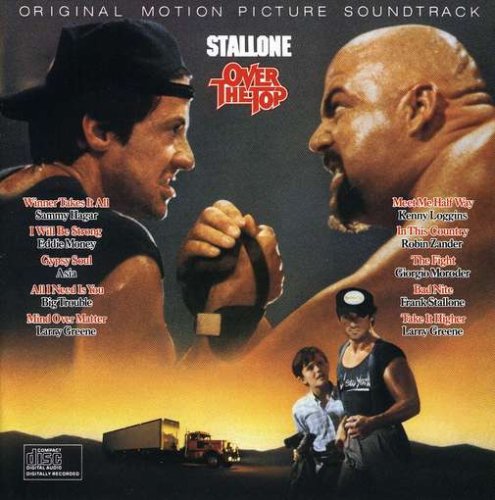
OVER THE TOP

  “Over The Top” is a movie starring Sylvester Stallone. I saw it in a movie theater in 1987, when I was about to be a high school student. As a teenage boy, I had my longing for strength.
  Today I watched “Over The Top” on TV. Remembering the days when I had tried to get strength, I checked the HP of World Armwrestling League. I found an interesting passage.

  Arm-wrestling as a sport is one of the most universal forms of competition in the country: virtually everyone in America has put their elbow on a table and gripped up with a friend or rival. It's the world’s most popular method of score-settling and a universal test of strength used around the globe. Arm-wrestling combines grit, tactics and mettle in a highly-accessible format that draws competitors from all walks of life, from school teachers to oil rig workers. But when you’re in The Pit, it’s not about what you do or where you come from, it’s about one thing: what you’re made of.

  I made a question for my high school students.
  Choose the best title of this passage from four choices.
    ①AMERICA IS STRONG  ②THE EVERYMAN'S SPORT
    ③THE GENTLEMEN'S SPORT  ④WHAT DO YOU DO?

  The title represents the American way of thinking.

Sunday, July 3, 2016

Advertisement


It is unusual for Japanese high schools to have a jazz club. Our high school has the club.

"Jazz and freedom go hand in hand," said Thelonious Monk, a black American pianist.

If you want to live in freedom and something black, you should join us!

Saturday, April 30, 2016

Tonoyama Taiji


a Japanese actor and essayist
1915-1989

Why do you go out?
Because there is nothing to do in the house.
Because staying in the house is miserable like a jobless actor.

How do you keep your way of life?
Walking on the street, listening to jazz, reading mysteries and drinking coffee.

Friday, April 29, 2016

I'll Remember May

In May 1989, I was sitting in the high school classroom. It had been just one month since the new school year began, so students’ seats were in order by their family name. In front of me was Okada-kun, behind me was Oyobe-kun. I was in my third year of high school. I had already broken up with members of the track and field club. I had almost no friends. Most students were going to universities, but I myself could not find out the true meaning of going to a university.
I remember it was one Saturday morning at the end of May. It was a class of Japanese. Mr. Tamaki, the Japanese teacher, called one student to read the text aloud and then another student was called to read it aloud.
“Something black, unknown and unfortunate has always depressed my mind.” I don’t remember who read this first sentence, but it struck my mind. I felt it sounded different from my image of the school textbook. I started reading the novel by myself. It was no longer the Japanese textbook. It was the first experience of feeling the power of language. Words were not for the test. They were taking me somewhere different from the world I was actually living in. I felt as if I were escaping away from reality. I came to know the strange power of literature.
On the same day, I went to a place called Jazz-kissa in Jimbo-cho. The name of it was “Hibiki.” I remember a man reading a horse racing paper in the sea of Jazz sound. The next day was the Japan Derby. I couldn’t bet any money, but I wanted to create something. It was the beginning of my life.

Quiz: What’s the title of the novel?